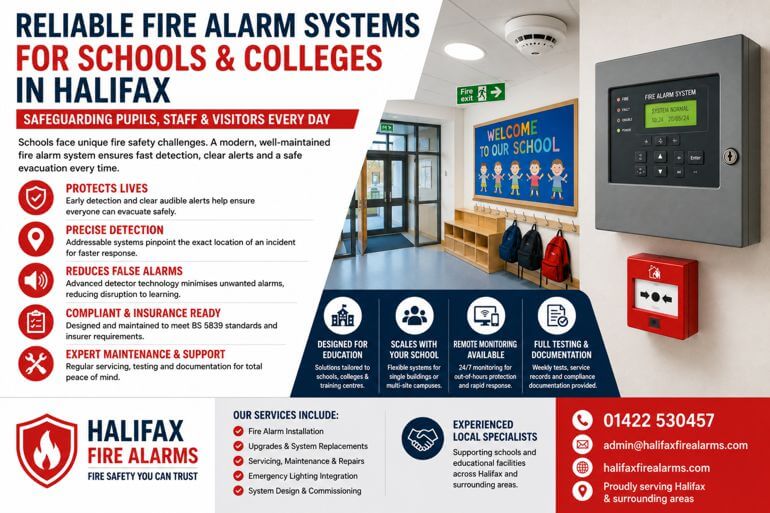
School Fire Alarm Systems –
Schools, colleges and educational facilities across Halifax face unique fire safety challenges. Unlike many commercial premises, educational buildings often contain large numbers of occupants spread across classrooms, corridors, halls, kitchens and temporary structures. Evacuation procedures need to work quickly, clearly and consistently every time an alarm activates.
Because of this, a reliable commercial fire alarm system is one of the most important safety investments any educational setting can make.
Many schools in Halifax operate from buildings that have evolved over decades. Extensions may have been added, classrooms repurposed and temporary accommodation introduced over time. While these changes improve capacity and flexibility, they can also create complications for fire alarm coverage, detector positioning and evacuation planning.
A fire alarm system that worked effectively ten years ago may no longer provide suitable protection for the building as it exists today.
Educational environments also present a wide variety of fire risks. Kitchens, science laboratories, ICT suites, storage rooms and maintenance areas all require different types of fire detection depending on their use. Inappropriate detector selection can result in repeated false alarms or delayed activation during genuine incidents.
Modern commercial fire alarm systems allow schools to tailor protection more accurately throughout the premises. Heat detectors can be used in high-steam environments, optical detectors in classrooms and specialist detection equipment in server rooms or plant areas.
False alarms are a major issue within schools and colleges. Repeated evacuations disrupt learning, create operational pressure and can eventually reduce the seriousness with which alarms are treated. Older systems are particularly prone to false activations caused by detector contamination, ageing equipment or incorrect placement.
Modern addressable fire alarm systems help reduce these issues significantly. Individual devices can be monitored more accurately, allowing faults and recurring issues to be identified quickly before they escalate into larger problems.
Addressable systems are especially valuable in larger educational buildings because they identify the exact detector or call point that has activated. This allows staff and emergency responders to pinpoint incidents rapidly rather than searching entire zones or floors.
For schools with multiple buildings or campus-style layouts, this level of precision can substantially improve evacuation management and emergency response.
Another important consideration for schools in Halifax is system reliability outside normal operating hours. Educational premises are often unoccupied during evenings, weekends and school holidays, meaning fire incidents may otherwise go unnoticed for extended periods. Monitored fire alarm systems can provide automatic notification to alarm receiving centres, ensuring rapid action if alarms activate while the site is empty.
Battery backup reliability is also essential in educational environments. During power failures, fire alarm systems must continue operating correctly to protect occupants and maintain compliance. Older systems may contain standby batteries nearing the end of their operational life, creating hidden vulnerabilities.
Routine servicing and testing ensure these backup systems remain dependable.
Educational buildings are also subject to regular inspections, safeguarding responsibilities and insurer requirements. Maintaining a properly serviced and compliant fire alarm system helps demonstrate that fire safety obligations are being taken seriously.
For facilities managers and school leadership teams, documentation is equally important. Detailed service records, weekly testing logs and maintenance reports help provide evidence that systems are being managed correctly and consistently.
Modern fire alarm systems can also integrate with wider site safety measures. Automatic door releases, smoke ventilation systems and emergency lockdown procedures can all be linked into the fire alarm infrastructure where appropriate. This creates a more coordinated and effective emergency response across the site.
As schools increasingly adopt new technologies and expand ICT infrastructure, protecting server rooms and communications equipment is becoming more important too. Fire incidents affecting critical systems can create prolonged disruption to administration, safeguarding systems and day-to-day operations.
Commercial fire alarm design for schools therefore requires careful planning around occupancy, evacuation routes, accessibility and operational continuity.
Businesses and educational facilities searching for Fire Alarms Halifax services are increasingly looking for long-term reliability and proactive support rather than simply basic installation work. Ongoing maintenance, system upgrades and compliance guidance all play a major role in ensuring educational buildings remain protected year after year.
Whether protecting a primary school, academy, college or training centre, a properly designed commercial fire alarm system helps safeguard pupils, staff, visitors and property while supporting smoother day-to-day operations across the entire site.