Fire Alarm Testing –
For many businesses in Halifax, weekly fire alarm testing is seen as a routine administrative task rather than a critical part of fire safety management. In reality, these regular tests play an essential role in ensuring that commercial fire alarm systems remain reliable, compliant and capable of protecting occupants during an emergency.
Even modern fire alarm systems can develop faults over time. Without regular testing, businesses may remain unaware of:
- failed sounders
- damaged call points
- power supply issues
- detector faults
- or communication failures
Weekly testing helps identify these problems before they affect safety.
Fire Alarm Systems Must Be Ready at All Times
Commercial fire alarm systems exist to provide immediate warning when a fire occurs. If the system fails during an emergency, evacuation delays can place occupants at significant risk.
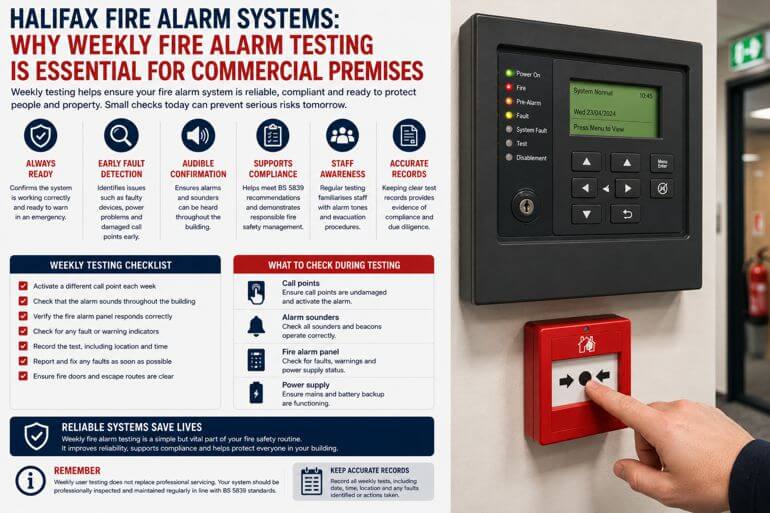
Weekly testing helps confirm that:
- alarms activate correctly
- sounders are audible
- call points function properly
- and the panel responds as expected
For busy Halifax workplaces, this reassurance is essential.
Testing Helps Identify Faults Early
One of the biggest advantages of weekly testing is early fault detection.
Common issues identified during routine checks include:
- disconnected devices
- battery faults
- damaged call points
- sounder failures
- and network communication errors
Detecting these problems early prevents faults from remaining unnoticed for long periods.
Different Areas of the Building Should Be Rotated
Testing should not involve activating the same call point every week.
Instead, businesses should rotate testing points throughout the premises to ensure:
- all devices are checked over time
- different sounders are verified
- and coverage remains effective across the building
In larger Halifax commercial premises, structured testing schedules are particularly important.
Staff Become Familiar with Alarm Tones
Regular testing also improves staff awareness.
Employees become familiar with:
- alarm sounds
- evacuation procedures
- and expected responses
This reduces confusion during genuine emergencies and helps improve evacuation efficiency.
Weekly Testing Supports Compliance
Commercial fire alarm systems should generally be maintained in accordance with BS 5839 recommendations.
Weekly user testing forms part of this process and helps demonstrate responsible fire safety management.
Accurate records should be maintained showing:
- test dates
- activation points used
- faults identified
- and corrective actions taken
These records may be requested during inspections or investigations.
False Alarms and Real Faults Can Be Distinguished
Regular testing helps staff and management recognise the difference between:
- scheduled test activations
- false alarms
- and genuine emergencies
This improves confidence in the system and reduces uncertainty.
Building Changes Can Affect System Performance
Commercial premises evolve over time.
Changes such as:
- partition walls
- layout alterations
- storage changes
- and occupancy increases
can all affect how well alarms are heard or how quickly occupants respond.
Weekly testing provides opportunities to identify these issues before they become safety risks.
Audible Coverage Is Especially Important
In larger Halifax buildings, alarm audibility is critical.
Testing helps confirm alarms can still be heard in:
- offices
- warehouses
- plant areas
- meeting rooms
- toilets
- and communal spaces
Background noise levels can also change over time, particularly in industrial or manufacturing environments.
Fire Alarm Panels Should Also Be Checked
Testing is not only about activating a call point.
Users should also check:
- panel status indicators
- fault warnings
- power supply status
- and any communication alerts
Early identification of panel faults helps prevent wider system failures.
Professional Servicing Remains Necessary
Weekly testing does not replace professional maintenance.
Commercial systems still require:
- routine servicing
- detector cleaning
- battery checks
- device inspections
- and system certification
User testing and professional servicing work together to maintain reliability.
Staff Should Understand the Testing Procedure
Businesses should ensure responsible staff understand:
- how to carry out tests safely
- how to record results
- and what to do if faults are discovered
Clear internal procedures help maintain consistency.
Reliable Systems Support Safer Evacuation
Ultimately, weekly testing exists to ensure that occupants receive reliable warning when it matters most.
For businesses in Halifax, regular fire alarm testing provides:
- improved reliability
- stronger compliance
- earlier fault detection
- and greater confidence in emergency preparedness
A commercial fire alarm system should never simply be installed and forgotten. Consistent testing ensures it remains ready to protect people and property every day.
Frequently Asked Questions
How often should commercial fire alarms be tested?
Commercial fire alarm systems should normally receive weekly user testing alongside professional servicing.
Does weekly testing replace servicing?
No. Weekly checks are user tests and do not replace professional maintenance requirements.
Should every call point be tested?
Yes. Different call points should be rotated over time to ensure the entire system is checked.